

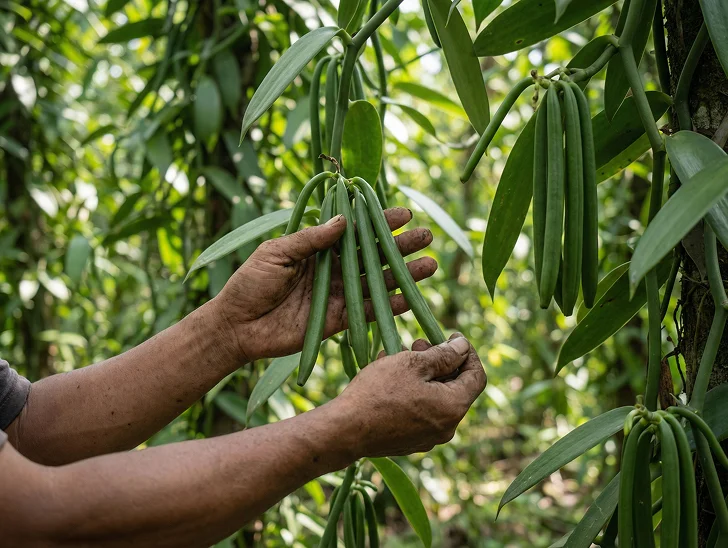
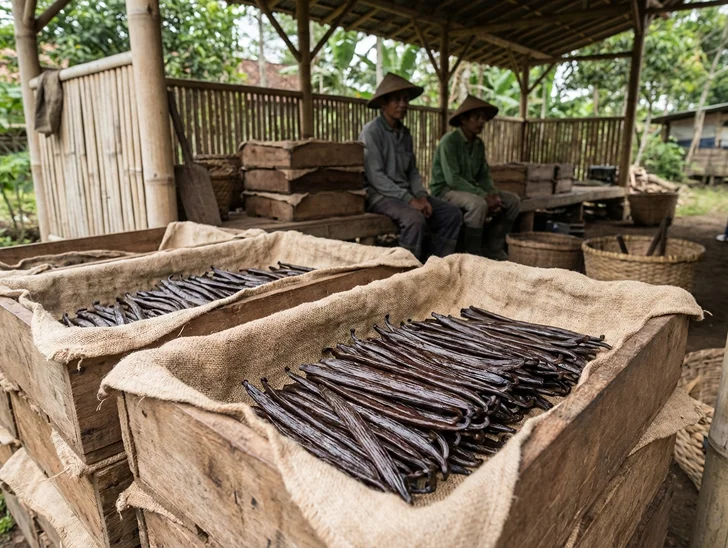

The process begins in the field. Vanilla is harvested only when the pod has reached proper maturity, not simply when volume targets are met. Timing here matters more than any later step.
Harvesting too early produces flat aroma. Harvesting too late compromises structure. We work within a narrow window to ensure the bean has both strength and potential before curing begins.
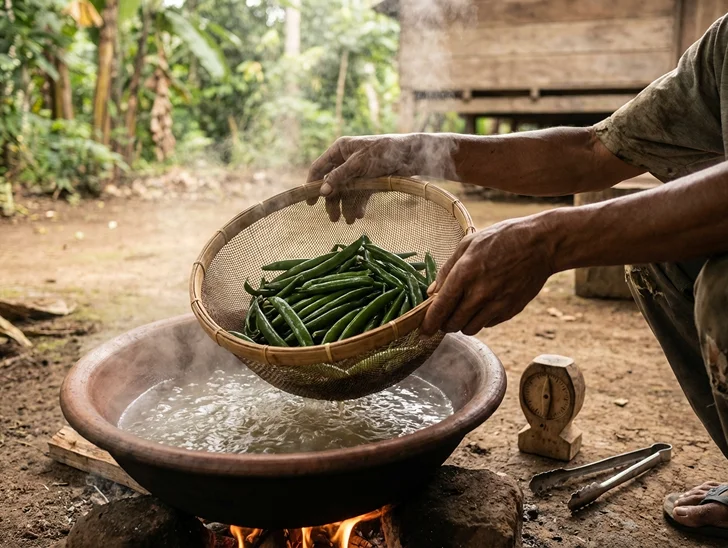
Soon after harvest, the beans undergo a brief and carefully controlled heat treatment. This step stops further growth and activates the enzymes responsible for aroma development.
The balance here is delicate. Too little heat and development is uneven. Too much and the finer notes are lost. This stage sets the foundation for everything that follows.
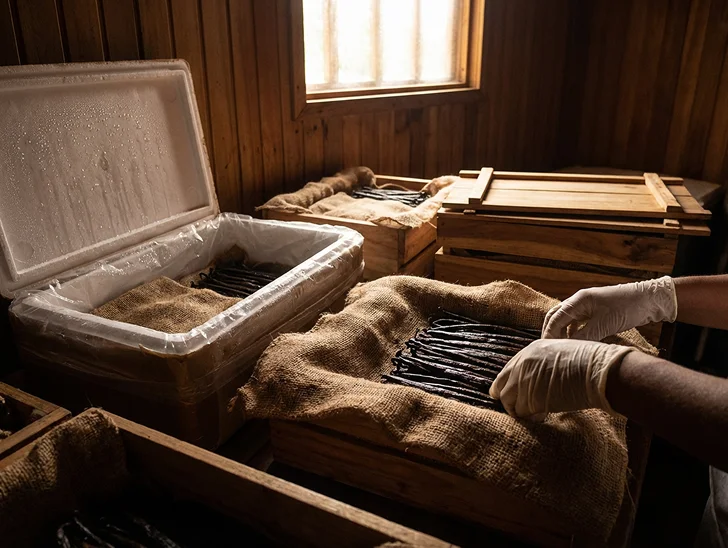
After blanching, the beans are wrapped and kept warm. During this period, internal changes take place as sugars and aroma compounds begin to develop.
This is where vanilla starts to become expressive. The environment is monitored closely, and the beans are handled gently to avoid damage during this sensitive phase.
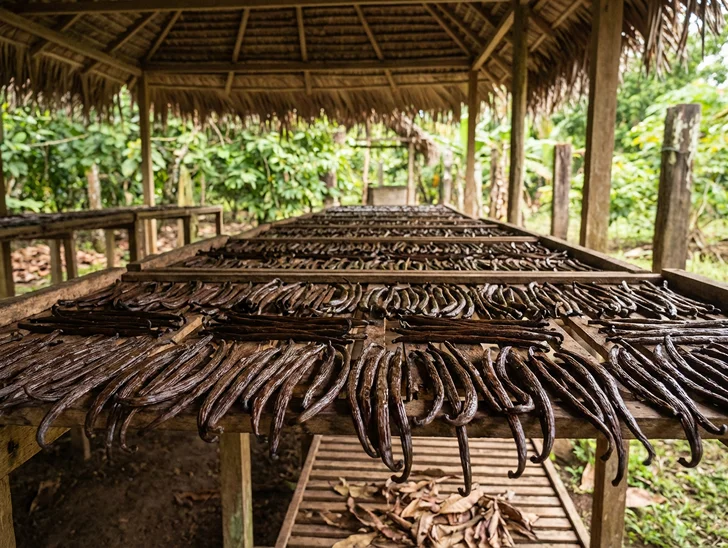
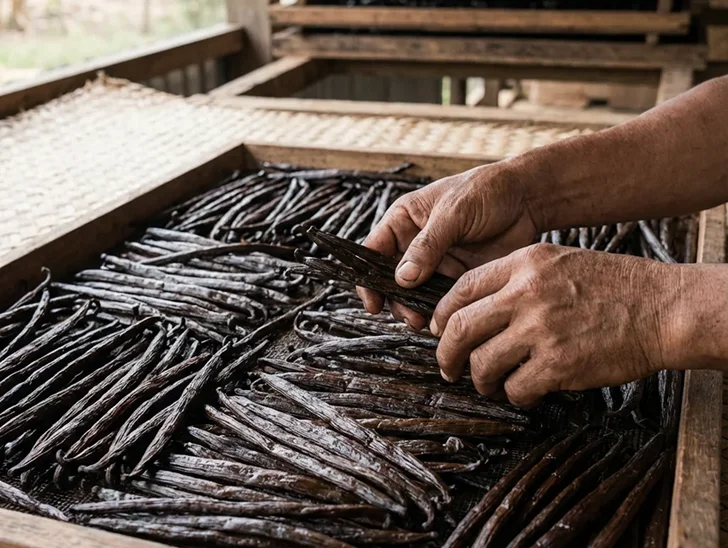
Drying happens slowly. Rather than pushing moisture out quickly, we allow the beans to rest and dry gradually, maintaining flexibility and preserving aroma.
The aim is not dryness, but balance. Beans that dry too far lose character and become brittle. Beans that retain too much moisture become unstable. We watch this stage closely, adjusting pace rather than forcing outcomes.
Once drying is complete, the beans are left to rest. During this time, aroma becomes rounder and more stable, and the bean settles into its final character.
This stage is often shortened in high-volume operations. We see it as essential. Conditioning brings cohesion and reliability, both in aroma and in how the bean behaves over time.
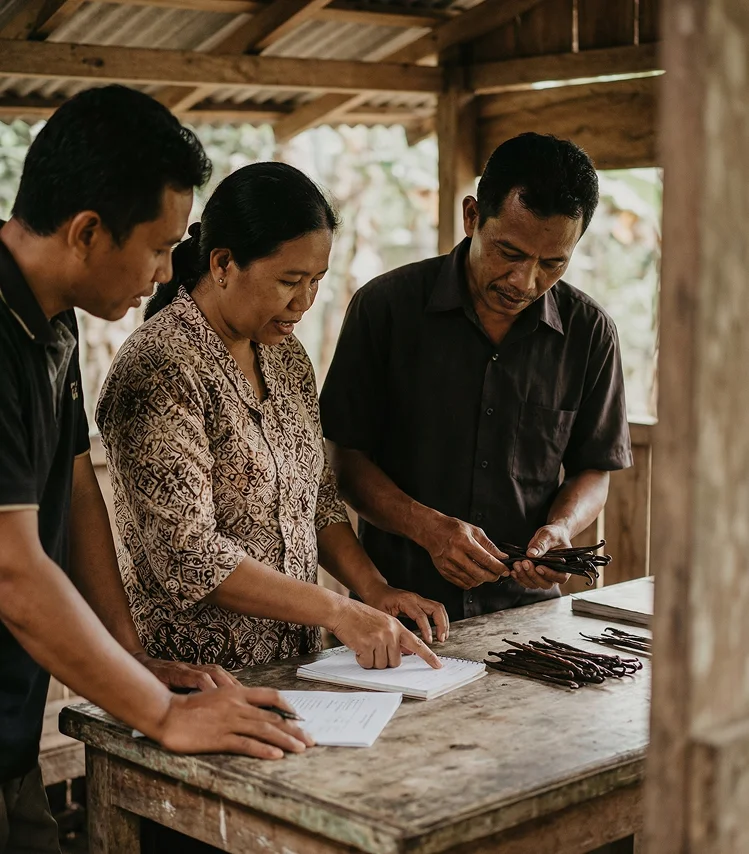
After conditioning, the beans are sorted and prepared based on their structure, appearance, and intended use. Grade A beans are selected for their length, fullness, moisture, and overall presentation.
Each batch is reviewed before packing to ensure consistency and condition are maintained through storage and transport.
If you would like to learn more about our process, available formats, or batch specifications, we are always happy to share details.
Much of the vanilla industry is built around efficiency. Faster curing reduces risk. Lower moisture simplifies transport. Broad blending smooths variation.
These practices create stability, but they often come at the cost of nuance.
Our approach places greater emphasis on pacing and care. We allow time where it matters, manage moisture with intention rather than caution, and keep closer control over batches instead of relying on wide blending.
The difference is subtle but meaningful. Not louder vanilla, but more complete vanilla. Beans that feel alive, balanced, and confident in use.
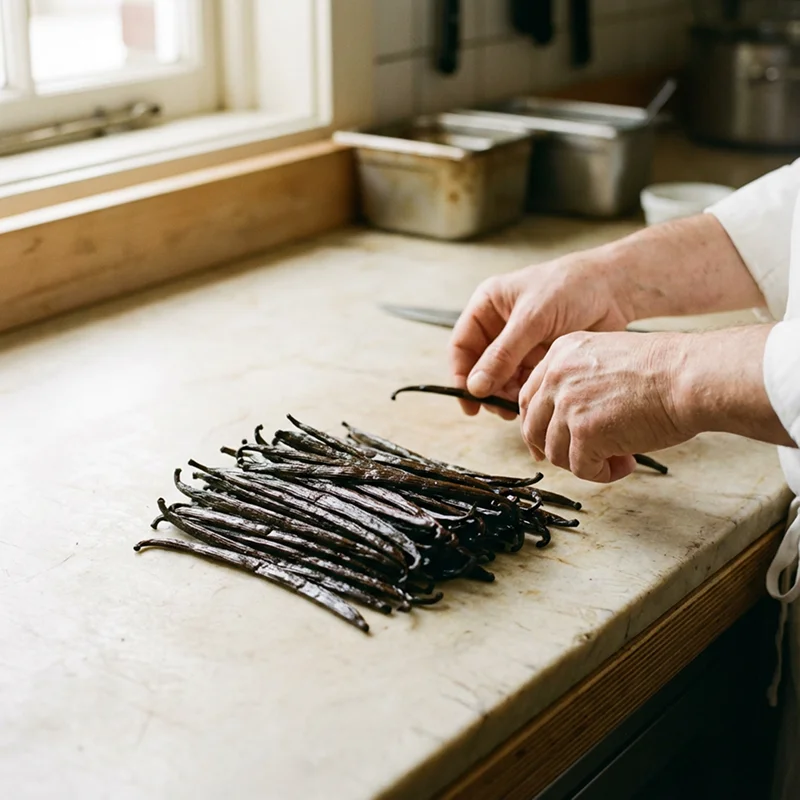
For those working with vanilla daily, this approach translates into ingredients that are easier to trust.
Whole beans remain flexible and aromatic. Prepared formats integrate cleanly into recipes. Results are consistent without feeling standardised.
The goal is not to impress, but to support good work.
If you would like to learn more about our process, available formats, or batch specifications, we are always happy to share details.
Jl Raya Ubud 5, Ubud, 80571 Gianyar